
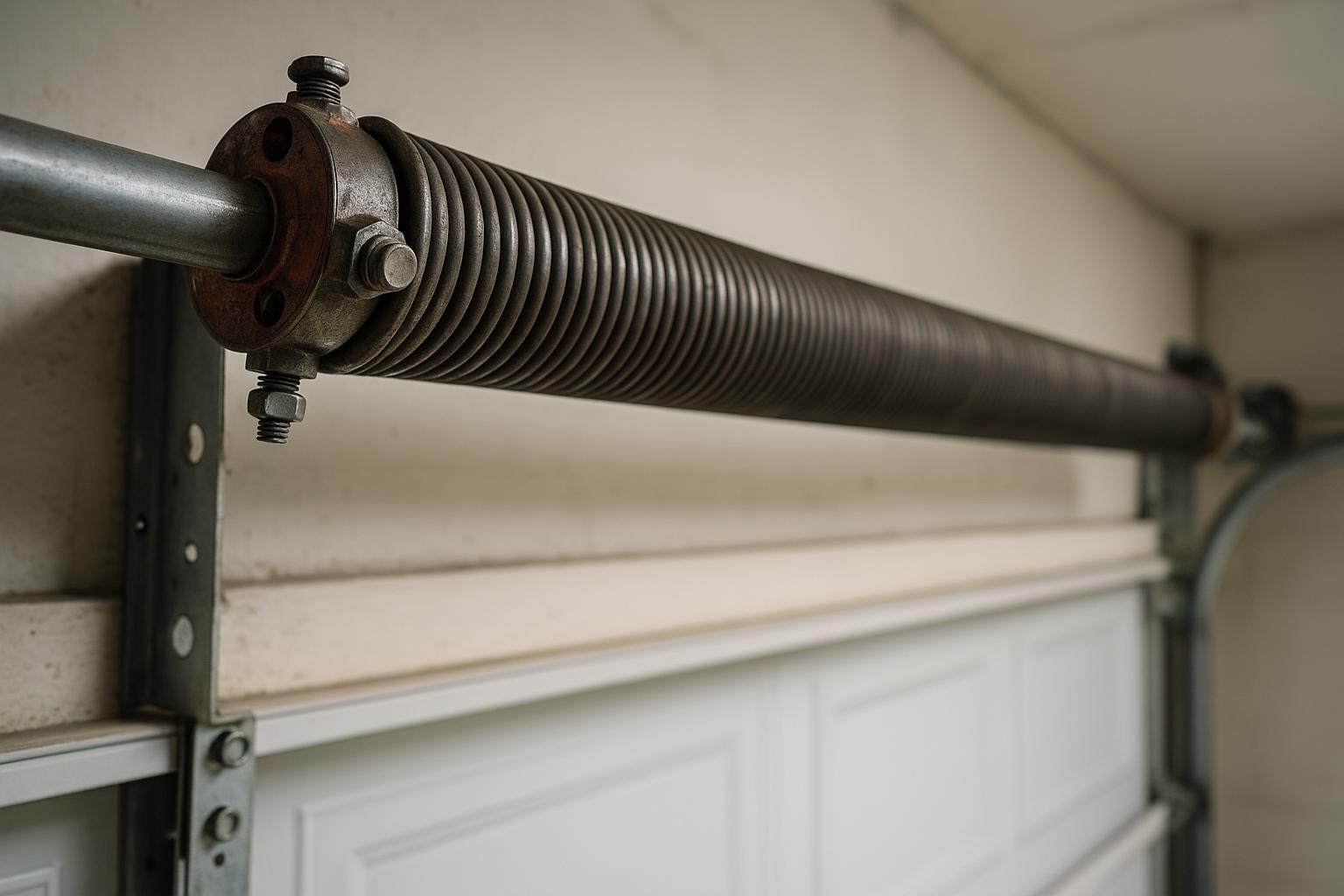
Your Garage Door Springs Are Doing More Than You Think
If you've ever tried to lift a garage door manually, you know just how heavy it is. A standard two-car garage door can weigh between 150 and 250 pounds — and it's the springs that do the heavy lifting every single time you open and close it. Most homeowners in Orland Park use their garage door multiple times a day without giving the springs a second thought. But like any hardworking component, garage door springs wear out over time.
The problem is that most people don't realize their springs are failing until they snap completely. A broken spring can leave your car trapped inside the garage, damage your opener, or even cause a serious safety hazard. Knowing the early warning signs can save you from an emergency repair — and potentially a much bigger bill.
How Long Do Garage Door Springs Last?
Most standard torsion springs are rated for approximately 10,000 cycles. One cycle equals one full open-and-close of the door. If your household opens the garage door four times a day, that's roughly 1,460 cycles per year — meaning your springs could wear out in about seven years.
However, several factors can shorten that lifespan:
- Extreme temperature swings: Here in the Orland Park area, we experience significant seasonal temperature changes that cause metal to expand and contract repeatedly.
- Lack of maintenance: Springs that aren't lubricated regularly develop more friction and wear out faster.
- Rust and corrosion: Moisture in the garage can cause springs to corrode, weakening the metal over time.
- Improper installation: If the springs weren't sized correctly for your door's weight, they'll be under extra stress from day one.
7 Warning Signs Your Garage Door Springs Are Failing
1. The Door Feels Heavier Than Usual
If your garage door seems sluggish going up or feels noticeably heavier when you try to lift it manually, the springs are likely losing tension. Healthy springs should make the door feel almost weightless when you lift it by hand. If it takes real effort, that's a clear sign the springs are weakening.
2. The Door Opens Unevenly or Crooked
Does one side of your garage door rise faster than the other? This often happens when one spring is more worn than the other, or when a spring on one side has already broken. An uneven door puts extra strain on the tracks, rollers, and opener — creating a chain reaction of problems if left unaddressed.
3. You Hear a Loud Bang From the Garage
If you heard a loud bang — almost like a gunshot — coming from your garage, there's a strong chance a spring just snapped. When a torsion spring breaks, it unwinds rapidly and releases a tremendous amount of stored energy. Many Orland Park homeowners tell us they thought something fell or someone broke in, only to discover a broken spring when they checked.
4. There's a Visible Gap in the Spring
Take a look at the torsion spring mounted above your garage door. If you see a visible gap or separation in the coils, the spring has already broken. This is the most obvious sign, but it requires you to actually look up and inspect the hardware — something most people rarely do.
5. The Opener Struggles or Stops Working
Your garage door opener is designed to guide the door — not lift its full weight. When springs fail, the opener has to work much harder. You might notice the motor straining, the door reversing partway up, or the opener shutting off entirely. Continuing to use a failing opener with bad springs can burn out the motor, turning a spring replacement into a much more expensive repair.
6. The Door Slams Shut Quickly
When you close your garage door, the springs control the descent so it lowers slowly and smoothly. If the door drops faster than normal or slams shut, the springs aren't providing enough counterbalance. This is a safety concern, especially for families with children or pets in Orland Park homes where the garage doubles as a play area or workspace.
7. Visible Rust or Wear on the Springs
During a quick visual inspection, look for rust, corrosion, or stretched-out coils on your springs. Rusty springs are weaker and more brittle, making them far more likely to snap without warning. Regular lubrication with a silicone-based spray can slow down corrosion, but once rust has significantly eaten into the metal, replacement is the safest option.
Can You Replace Garage Door Springs Yourself?
We strongly advise against DIY spring replacement. Garage door springs are under extreme tension, and improper handling can result in serious injury or even death. There are numerous reports every year of homeowners being hurt attempting this repair without the proper tools and training.
Professional technicians use specialized winding bars, clamps, and safety equipment to replace springs safely. The job typically takes less than an hour for an experienced technician, and you'll have the peace of mind knowing it was done correctly and safely.
Torsion Springs vs. Extension Springs
There are two main types of garage door springs, and it helps to know which type your door uses:
- Torsion springs are mounted on a metal shaft above the door opening. They twist to store energy and are the more common type in modern garage doors. They tend to last longer and provide smoother operation.
- Extension springs run along the horizontal tracks on either side of the door. They stretch and contract to lift the door. These are more common in older homes and are generally considered less safe because they can become projectiles if they break without safety cables.
If your home in Orland Park or the surrounding communities like Tinley Park, Homer Glen, or Mokena still has extension springs, it may be worth upgrading to torsion springs during your next replacement for improved safety and performance.
How Much Does Spring Replacement Cost?
The cost of garage door spring replacement varies depending on the type of spring, the size and weight of your door, and whether one or both springs need replacing. Generally, most homeowners can expect to pay between $150 and $350 for a professional spring replacement, including parts and labor.
We always recommend replacing both springs at the same time, even if only one has broken. If one spring has reached the end of its lifespan, the other is likely close behind. Replacing both saves you from paying for a second service call in a few weeks or months.
Preventive Maintenance Makes a Difference
You can extend the life of your garage door springs with some simple maintenance steps:
- Lubricate springs every few months with a garage door-specific or silicone-based lubricant.
- Test the door's balance by disconnecting the opener and lifting the door manually to the halfway point. If it stays in place, the springs are properly balanced. If it falls or rises, they need adjustment.
- Schedule annual maintenance with a professional who can inspect springs, cables, rollers, and other hardware for wear.
At Orland Park Garage Door, we offer maintenance services designed to catch small problems before they turn into big ones. Our technicians serve homeowners across Orland Park, Frankfort, New Lenox, and the entire Southland area.
Don't Wait for a Spring to Snap
A broken garage door spring always seems to happen at the worst possible time — when you're running late for work, loading up for a family trip, or coming home after a long day. If you've noticed any of the warning signs we've covered, don't wait for a complete failure. Give us a call at Orland Park Garage Door and let our experienced technicians inspect your springs and get your door operating safely and smoothly again.