
That Loud Garage Door Isn't Just Annoying — It Might Be a Warning
You hit the button, and the whole house knows about it. The grinding, squealing, rattling, or banging that comes from your garage door every time it opens or closes isn't just a nuisance — it can be a sign that something needs attention. If you live in Orland Park and your garage door has been getting progressively louder, you're not alone. It's one of the most common complaints we hear from homeowners, and the good news is that most causes are fixable.
Let's walk through the most common reasons your garage door is making noise, what each sound might mean, and when it's time to call in a professional.
Common Causes of a Noisy Garage Door
Not all garage door noises are created equal. The type of sound you're hearing can tell you a lot about what's going wrong. Here are the most frequent culprits:
1. Worn or Dry Rollers
Garage door rollers guide the door along the tracks as it opens and closes. Over time, metal rollers wear down and lose their smooth rotation. When they do, you'll hear a grinding or squeaking sound that gets worse with every cycle. Steel rollers are especially prone to this because metal-on-metal contact creates friction and noise.
If your rollers haven't been lubricated or replaced in several years, they're likely a major contributor to the racket.
2. Loose Hardware
Your garage door moves up and down hundreds of times a year. All that vibration gradually loosens nuts, bolts, hinges, and brackets. When hardware is loose, you'll typically hear a rattling or shaking sound as the door operates. This is one of the easiest problems to fix, but it shouldn't be ignored — loose components can lead to bigger mechanical failures down the road.
3. Unbalanced Door
If your garage door sounds like it's straining or makes a loud banging noise when it reaches the floor, it may be unbalanced. An unbalanced door puts extra stress on the opener, springs, and cables, which creates noise and accelerates wear on every part of the system. You can test this by disconnecting the opener and manually lifting the door halfway. If it doesn't stay in place on its own, the balance is off.
4. Worn-Out Hinges
Hinges connect the panels of your garage door and allow them to flex as the door curves along the track. When hinges wear out, the holes they sit in can become oblong, causing the hinge to shift and create a popping or snapping sound. In some cases, you might even see metal filings around the hinge — a clear sign it needs to be replaced.
5. Chain Drive Opener
If your garage door opener uses a chain drive, some noise is normal. Chain drives are durable and affordable, but they're inherently louder than belt drive systems. If your opener has always been noisy, this might just be the nature of the mechanism. However, if the noise has increased recently, the chain may need to be tightened or the opener may need servicing.
6. Track Issues
Bent, misaligned, or dirty tracks can cause scraping, rubbing, or squealing sounds. If the door looks like it's struggling to move smoothly through the tracks, there may be an obstruction or the tracks themselves may have shifted out of alignment. This is a problem that should be addressed quickly because a door that jumps off its tracks is a serious safety hazard.
Quick Fixes You Can Try at Home
Before you pick up the phone, there are a few things you can safely do yourself to reduce garage door noise:
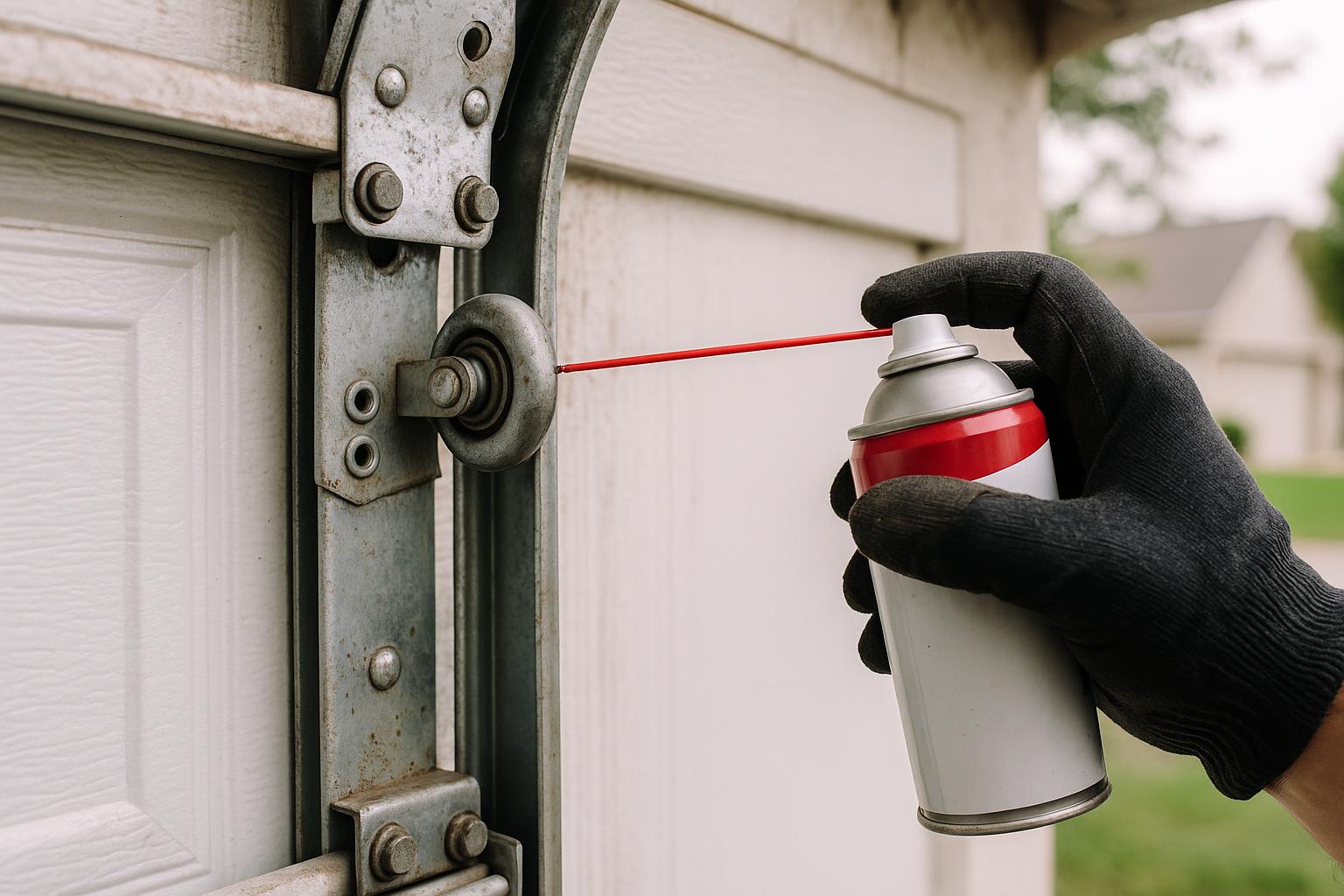
- Lubricate moving parts. Apply a garage door-specific lubricant (not WD-40, which is a degreaser) to the rollers, hinges, springs, and tracks. A silicone-based or lithium-based spray works best. This alone can make a dramatic difference.
- Tighten loose hardware. Grab a socket wrench and go over all the nuts and bolts on the door and track system. Snug everything up, but don't overtighten.
- Inspect the rollers. Look at each roller for signs of wear, cracking, or flat spots. If they're visibly damaged, they need to be replaced.
- Check for debris in the tracks. Leaves, dirt, pebbles, and even ice buildup can cause noise and interfere with smooth operation. Wipe down the inside of the tracks with a clean cloth.
When to Upgrade to Nylon Rollers
One of the most effective ways to quiet a noisy garage door is to replace standard steel rollers with nylon rollers. Nylon rollers are significantly quieter because they eliminate metal-on-metal contact. They also don't require as much lubrication and tend to last longer than their steel counterparts.
For homeowners in Orland Park neighborhoods where houses are close together, this upgrade can make a real difference — especially if someone in the house sleeps near the garage or you're leaving for work early in the morning.
When to Consider a Belt Drive Opener
If your chain drive opener is the main source of noise and it's getting up there in age, it might be worth upgrading to a belt drive opener. Belt drives use a rubber belt instead of a metal chain, which makes them dramatically quieter during operation. Modern belt drive openers also come with features like smartphone connectivity, battery backup, and improved safety sensors.
This is an especially popular upgrade for families with living spaces above or adjacent to the garage.
When You Should Call a Professional
Some garage door noise issues are straightforward, but others require professional tools and expertise. You should call a technician if:
- The door is visibly unbalanced or difficult to open manually
- You notice frayed cables or damaged springs
- The tracks are bent or the door is off-track
- Lubrication and tightening haven't reduced the noise
- The opener is making grinding or clicking sounds but the door won't move
Garage door springs and cables are under extreme tension and can cause serious injury if handled improperly. These repairs should always be left to a trained professional.
Don't Wait Until the Noise Becomes a Breakdown
A loud garage door is your home telling you something needs attention. In many cases, the fix is simple and affordable — a little lubrication, some tightened bolts, or a set of new rollers. But if you ignore the warning signs, a minor noise issue can turn into a major repair.
At Orland Park Garage Door, we help homeowners across Orland Park, Tinley Park, Homer Glen, and the surrounding Southland communities diagnose and fix noisy garage doors every day. Whether you need a quick tune-up, new rollers, or a full opener replacement, we'll get your door running quietly and reliably again.
If your garage door has been keeping the whole block awake, give us a call. We'll figure out what's going on and get it taken care of — no guesswork, no runaround.